|
1
|
|
|
2
|
|
|
3
|
|
|
4
|
|
|
5
|
|
|
6
|
|
|
7
|
|
|
8
|
|
|
9
|
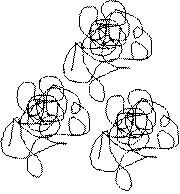
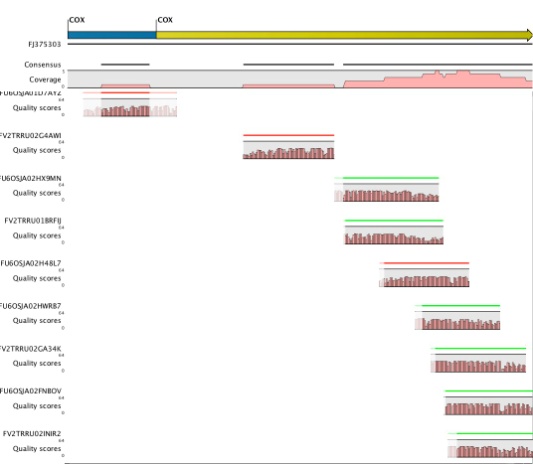
- We start with millions of pairs of reads, 100 - 1000 bases each
- Multiple copies of DNA provide multiple coverage by reads
- The problem of genome assembly is to recover the original sequence of
bases of the genome (as much as possible…).
|
|
10
|
- The task of the assembly becomes the task of assembling a giant jigsaw
puzzle
- We look for reads whose sequences suggest that they came from the same
place in the genome:
AGTGATTAGATGATAGTAGA
|||||||||
GATGATAGTAGAGGATAGATTTA
|
|
11
|
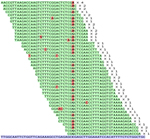
- Then we put “overlapping” reads together
- AGTGATTAGATGATAGTAGA
-
AGATGATAGTAGAGATAGATAGACC
-
ATAGATAGACCACTCATCATAC
- AGTGATTAGATGATAGTAGAGATAGATAGACCACTCATCATAC
|
|
12
|
- We use read pairing information to order and orient contigs to produce scaffolds
– the final product of assembly
|
|
13
|
|
|
14
|
|
|
15
|
- Two recent published assemblies of the cow genome: UMD2 and BosTau4
- Segmental duplications were a central theme in BosTau4 genome paper
- UMD2 assembly had many fewer duplications
- We examined the duplications, > 99.5% identity, >5000bp, one copy
in the UMD2 assembly and two copies in the BosTau4
|
|
16
|
|
|
17
|
|
|
18
|
|
|
19
|
|
|
20
|
|
|
21
|
|

 備忘錄