
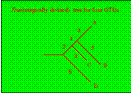
NJ Tree

1
2
OTU
A
B
C
D
r
r/2
A
-
8
7
12
27
13.5
B
-
9
14
31
15.5
C
-
11
27
13.5
D
-
37
18.5
Note
that we have two new columns to the right.
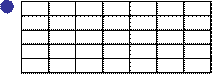
The first column (r) is the sum of the distances from the row OTU to all other OTUs. Thus 8+7+12 = 27 (A to everything else); 8+9+14 = 31 (B to everything else); etc. The r/2 is something we will use later. The denominator (the 2) is the matrix size (number of OTUs) minus two. I will explain that later.

8+7+12
8+9+14
OTU
A
B
C
D
A
-
8
7
12
B
-21.00
-
9
14
C
-20.00
-20.00
11
D
-20.00
-20.00
-21.00
-
3
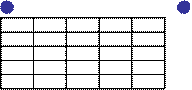
Original A-B value (8) minus the average of
the A and B r-values [(27+31)/2 = 29].
8 - 29 = -21.
A-C = -20. Original A-C value (7) minus
average of A and C r-values
[(27+27)/2 = 27]. 7 - 27 = -20.
B to Node 1: Original B-A distance divided
by two (original distance between the components/2) plus (B's r/2 minus A's r/2) divided by two.
8/2 + (15.5 - 13.5)/2 = 5
B to Node 1 = 5
A to B = 8; B to Node 1 = 5. Therefore A to Node 1 = 8 - 5 = 3.
A to Node 1 = 3
Alternative method starting with A to Node 1:
(Original A to B) + (A's r/2 minus B's r/2) divided by two
8/2 + (13.5 -
15.5)/2 = 4 + -1 = 3
Finally B to Node 1 = A to B - A to Node 1 = 8 - 3 = 5
4
31